Dementia Researcher Blogs
The Dementia Researcher Blogs Podcasts - through this show, you can hear our bloggers read their blogs. So if you prefer to read, you can head or our website or you can listen on the move. These shows are about academic / research careers, research, science and life as an early career dementia researchers. Brought to you by https://www.dementiaresearcher.nihr.ac.uk - everything you need, all in one place. Remember to subscribe to our main ‘Dementia Researcher‘ Podcast, here and where ever you get your podcasts.
Listen on:






Episodes

Thursday Oct 24, 2024
Thursday Oct 24, 2024
Amelia Robson, narrates her blog written for the Dementia Researcher website.
In this blog, Amelia reflects on her experiences working with people living with dementia during her home sleep studies. She discusses how TV adverts, especially those focused on dementia, can unexpectedly evoke powerful emotions during her visits, creating poignant and sometimes uncomfortable moments for both her and the caregivers. Amelia also shares the delicate balance between maintaining professionalism and managing her own emotions, while remaining fully committed to the well-being of her patients.
Find the original text, and narration here on our website.
https://www.dementiaresearcher.nihr.ac.uk/blog-why-i-have-a-complicated-relationship-with-tv-adverts/
--
Amelia Robson is a Research Assistant at Northumbria University supporting delivery of NHS Clinical Trials, particularly in working with Dementia with Lewy bodies and Alzheimer’s disease patients. This work currently involves visiting patient’s homes and applying polysomnography sleep equipment on their face, scalp and body. Amelia graduated in Psychology in 2021 and is passionate about supporting people living with the dementia, and providing help for care givers. Her top tip.... Trust your Gut to stay on the right path. Follow Amelia Robson on LinkedIn
--
Enjoy listening? We're always looking for new bloggers, drop us a line. http://www.dementiaresearcher.nihr.ac.uk
This podcast is brought to you in association with Alzheimer's Association, Alzheimer's Research UK, Alzheimer's Society and Race Against Dementia, who we thank for their ongoing support.
--
Follow us on Social Media:
https://www.instagram.com/dementia_researcher/
https://www.facebook.com/Dementia.Researcher/
https://twitter.com/demrescommunity
https://www.linkedin.com/company/dementia-researcher
https://bsky.app/profile/dementiaresearcher.bsky.social
Thursday Oct 17, 2024
Thursday Oct 17, 2024
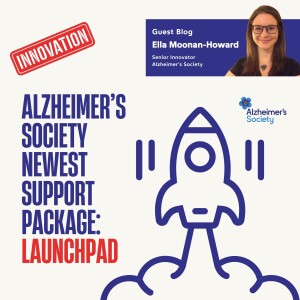
Ella Moonan-Howard, narrating her blog written for the Dementia Researcher website.The Alzheimer’s Society has launched a new support package called "Launchpad," designed to help innovators turn dementia research into impactful products. Led by Senior Innovator Ella Moonan-Howard, this programme offers tailored business coaching, expert networks, and hands-on support to help researchers develop viable business models and secure pilot opportunities. Launchpad is free and part-time, making it accessible for researchers alongside their academic roles. Applications open on 14th October. Find out more - https://www.alzheimers.org.uk/research/our-research/dementia-innovation/launchpadFind the original text, and narration here on our website.
https://www.dementiaresearcher.nihr.ac.uk/blog-alzheimers-society-newest-support-package-launchpad/
#HealthInnovation #VentureScience #Innovation
--
Dr Ella Moonan-Howard is a Senior Innovator at the Alzheimer's Society. Ella previous worked at Zinc, supporting early stage start-ups and their founders to build research skills and to test their products as they built them. Obsessed with seeing the direct impact these start-ups could make, she moved to Alzheimer's Society to ensure the next generation of dementia products go on to achieve scale and change the lives of those living with dementia. Find Ella on LinkedIn
--
Enjoy listening? We're always looking for new bloggers, drop us a line. http://www.dementiaresearcher.nihr.ac.uk
This podcast is brought to you in association with Alzheimer's Association, Alzheimer's Research UK, Alzheimer's Society and Race Against Dementia, who we thank for their ongoing support.
--
Follow us on Social Media:
https://www.instagram.com/dementia_researcher/
https://www.facebook.com/Dementia.Researcher/
https://twitter.com/demrescommunity
https://www.linkedin.com/company/dementia-researcher
https://bsky.app/profile/dementiaresearcher.bsky.social
Wednesday Oct 16, 2024
Wednesday Oct 16, 2024
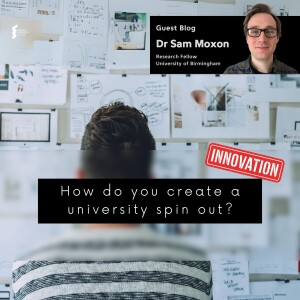
Dr Sam Moxon, narrates his blog written for Dementia Researcher.
Sam's blog, offers a step-by-step guide for academics interested in turning their research into a successful business. Drawing from his own experience co-founding a spin-out at the University of Birmingham, Sam shares insights on how to transform an idea into a viable enterprise. The blog covers crucial aspects such as finding the right support, protecting intellectual property, market validation, negotiating with the university, and securing funding. It’s a must-read for anyone considering the journey from innovation to commercialisation, packed with practical advice and personal reflections.
Find the original text, and narration here on our website.
https://www.dementiaresearcher.nihr.ac.uk/blog-how-do-you-create-a-university-spin-out/
#Spinout #Innovation
--
Dr Sam Moxon is a biomaterials Research Fellow at University of Birmingham. His expertise falls on the interface between biology and engineering. His PhD focussed on regenerative medicine and he now works on trying to develop 3D bioprinting techniques with human stem cells, so that we better understand and treat degenerative diseases. Outside of the lab he hikes through the Lake District and is an expert on all things Disney.
--
Enjoy listening and reading our blogs? We're always on the look out for new contributors, drop us a line and share your own research and careers advice dementiaresearcher@ucl.ac.uk
This podcast is brought to you in association with the NIHR, Alzheimer's Association, Alzheimer's Research UK, Alzheimer's Society and Race Against Dementia, who we thank for their ongoing support.
--
Follow us on Social Media:
https://www.instagram.com/dementia_researcher/
https://www.facebook.com/Dementia.Researcher/
https://twitter.com/demrescommunity
https://www.linkedin.com/company/dementia-researcher
https://bsky.app/profile/dementiaresearcher.bsky.social
Wednesday Oct 16, 2024
Wednesday Oct 16, 2024
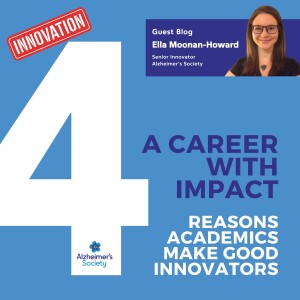
Ella Moonan-Howard, narrating her and Pepsi Reilly's blog written for the Dementia Researcher website.In this blog, Ella and Pepsi, explore why academics make great innovators. Drawing from her own journey from academia to dementia innovation, they highlight how research skills like project management, adaptability, and a scientific approach to problem-solving can drive impactful product development. The blog discusses the benefits of applying these skills in a fast-paced, collaborative environment and introduces the Alzheimer’s Society’s Launchpad programme, which helps academics turn ideas into real-world solutions for people living with dementia.Find the original text, and narration here on our website.
https://www.dementiaresearcher.nihr.ac.uk/blog-a-career-with-impact-4-reasons-academics-make-good-innovators/
#HealthInnovation #VentureScience #Innovation
--
Dr Ella Moonan-Howard is a Senior Innovator at the Alzheimer's Society. Ella previous worked at Zinc, supporting early stage start-ups and their founders to build research skills and to test their products as they built them. Obsessed with seeing the direct impact these start-ups could make, she moved to Alzheimer's Society to ensure the next generation of dementia products go on to achieve scale and change the lives of those living with dementia. Find Ella on LinkedIn
Pepsi Reilly has worked at the Alzheimer's Society since 2022 holding a number of positions within the Innovation Team, and having previously worked a number of charities and as a Research Assistant at University College London. Her work at UCL was focussed on dementia and care, and included work on the Continuing Compassion in Care (CCiC) Project: Exploring how informal carers of people living with dementia experience and maintain continuing compassion in care. Find Pepsi on LinkedIn
--
Enjoy listening? We're always looking for new bloggers, drop us a line. http://www.dementiaresearcher.nihr.ac.uk
This podcast is brought to you in association with Alzheimer's Association, Alzheimer's Research UK, Alzheimer's Society and Race Against Dementia, who we thank for their ongoing support.
--
Follow us on Social Media:
https://www.instagram.com/dementia_researcher/
https://www.facebook.com/Dementia.Researcher/
https://twitter.com/demrescommunity
https://www.linkedin.com/company/dementia-researcher
https://bsky.app/profile/dementiaresearcher.bsky.social
Monday Oct 14, 2024
Monday Oct 14, 2024
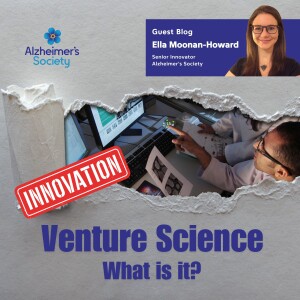
Ella Moonan-Howard, narrating her blog written for the Dementia Researcher website.Discover how venture science is transforming dementia care in the first blog of our week-long focus on innovation, written by Ella Moonan-Howard from the Alzheimer’s Society Innovation Team. Ella explores how companies like Big Health are combining academic research and commercial development to create evidence-based digital health solutions, and how this model could inspire the next generation of dementia innovators. Don’t miss this exciting insight into the future of healthcare products for people living with dementia! Visit our website for links to Alzheimer's Society's new support calls.Find the original text, and narration here on our website.
https://www.dementiaresearcher.nihr.ac.uk/blog-venture-science-what-is-it/
#HealthInnovation #VentureScience #Innovation
--
Dr Ella Moonan-Howard is a Senior Innovator at the Alzheimer's Society. Ella previous worked at Zinc, supporting early stage start-ups and their founders to build research skills and to test their products as they built them. Obsessed with seeing the direct impact these start-ups could make, she moved to Alzheimer's Society to ensure the next generation of dementia products go on to achieve scale and change the lives of those living with dementia. Find Ella on LinkedIn
--
Enjoy listening? We're always looking for new bloggers, drop us a line. http://www.dementiaresearcher.nihr.ac.uk
This podcast is brought to you in association with Alzheimer's Association, Alzheimer's Research UK, Alzheimer's Society and Race Against Dementia, who we thank for their ongoing support.
--
Follow us on Social Media:
https://www.instagram.com/dementia_researcher/
https://www.facebook.com/Dementia.Researcher/
https://twitter.com/demrescommunity
https://www.linkedin.com/company/dementia-researcher
https://bsky.app/profile/dementiaresearcher.bsky.social
Friday Oct 11, 2024
Friday Oct 11, 2024
Dr Clíona Farrell, narrating her blog written for the Dementia Researcher website.
Clíona shares a typical week looks like for a PhD student. From lab work and data analysis to committee meetings and outreach events, Clíona shares her experiences from each year of her PhD, offering valuable insights into the challenges and rewards of life as a researcher. Whether you're considering a PhD or just curious about the process, this blog provides an honest look at the variety and commitment involved in pursuing a research career.
Find the original text, and narration here on our website.
https://www.dementiaresearcher.nihr.ac.uk/blog-journey-to-a-phd-a-week-in-the-life-of-a-phd-student/
#PhDPosition #PhDLife #PhDFunding #PhDApplications
--
Dr Clíona Farrell is a Postdoctoral Researcher in the UK Dementia Research Institute at University College London. Her work focuses on understanding neuroinflammation in Down syndrome, both prior to, and in response to, Alzheimer’s disease pathology. Originally from Dublin, Ireland, Clíona completed her undergraduate degree in Neuroscience in Trinity College, and then worked as a research assistant in the Royal College of Surgeons studying ALS and Parkinson’s disease. She also knows the secret behind scopping the perfect 99 ice-cream cone. @ClionaFarrell_--
Enjoy listening? We're always looking for new bloggers, drop us a line. http://www.dementiaresearcher.nihr.ac.uk
This podcast is brought to you in association with Alzheimer's Association, Alzheimer's Research UK, Alzheimer's Society and Race Against Dementia, who we thank for their ongoing support.
--
Follow us on Social Media:
https://www.instagram.com/dementia_researcher/
https://www.facebook.com/Dementia.Researcher/
https://twitter.com/demrescommunity
https://www.linkedin.com/company/dementia-researcher
https://bsky.app/profile/dementiaresearcher.bsky.social
Wednesday Oct 09, 2024
Wednesday Oct 09, 2024
Dr Clíona Farrell, narrating her blog written for the Dementia Researcher website.
In the second of her three-part series Clíona offers practical advice for those applying to PhD programmes. She begins by discussing the importance of tailoring applications to specific projects and carefully reading job descriptions to meet both essential and desirable criteria. Clíona outlines the key components of a standout application: a clear, concise CV that highlights relevant education, research experience, and skills, and a personalised cover letter that demonstrates enthusiasm for the project and lab.
She recommends structuring the cover letter into two parts: the first part focuses on how the applicant's skills and experience make them suitable for the position, using evidence-based examples, while the second part explains why they are interested in the specific lab and project. Dr Farrell emphasises the importance of proofreading and personalising each application to improve chances of success. Remember... not to be discouraged by missing one or two skills and apply confidently.Find the original text, and narration here on our website.
https://www.dementiaresearcher.nihr.ac.uk/blog-how-to-write-a-standout-cv-and-cover-letter/
#PhDPosition #PhDLife #PhDFunding #PhDApplications
--
Dr Clíona Farrell is a Postdoctoral Researcher in the UK Dementia Research Institute at University College London. Her work focuses on understanding neuroinflammation in Down syndrome, both prior to, and in response to, Alzheimer’s disease pathology. Originally from Dublin, Ireland, Clíona completed her undergraduate degree in Neuroscience in Trinity College, and then worked as a research assistant in the Royal College of Surgeons studying ALS and Parkinson’s disease. She also knows the secret behind scopping the perfect 99 ice-cream cone. @ClionaFarrell_--
Enjoy listening? We're always looking for new bloggers, drop us a line. http://www.dementiaresearcher.nihr.ac.uk
This podcast is brought to you in association with Alzheimer's Association, Alzheimer's Research UK, Alzheimer's Society and Race Against Dementia, who we thank for their ongoing support.
--
Follow us on Social Media:
https://www.instagram.com/dementia_researcher/
https://www.facebook.com/Dementia.Researcher/
https://twitter.com/demrescommunity
https://www.linkedin.com/company/dementia-researcher
https://bsky.app/profile/dementiaresearcher.bsky.social
Monday Oct 07, 2024
Monday Oct 07, 2024
Dr Clíona Farrell, narrating her blog written for the Dementia Researcher website.
In the first of her three-part series Clíona shares her personal journey to obtaining a PhD, offering insights into the challenges and decisions she faced along the way. From her undergraduate experience at Trinity College Dublin to working as a research assistant in Ireland, Clíona reflects on how she navigated the uncertainty of whether a PhD was the right path for her. She emphasises the importance of gaining lab experience, working in diverse teams, and seeking mentorship. Clíona also discusses the application process, the role of advertised PhD positions, and encourages aspiring researchers to be proactive in reaching out to potential supervisors. Her story highlights that there are many routes to a PhD and offers practical advice for those considering this path.Find the original text, and narration here on our website.
https://www.dementiaresearcher.nihr.ac.uk/blog-journey-to-a-phd-how-to-get-there/
#PhDPosition #PhDLife #PhDFunding #PhDApplications
--
Dr Clíona Farrell is a Postdoctoral Researcher in the UK Dementia Research Institute at University College London. Her work focuses on understanding neuroinflammation in Down syndrome, both prior to, and in response to, Alzheimer’s disease pathology. Originally from Dublin, Ireland, Clíona completed her undergraduate degree in Neuroscience in Trinity College, and then worked as a research assistant in the Royal College of Surgeons studying ALS and Parkinson’s disease. She also knows the secret behind scopping the perfect 99 ice-cream cone. @ClionaFarrell_--
Enjoy listening? We're always looking for new bloggers, drop us a line. http://www.dementiaresearcher.nihr.ac.uk
This podcast is brought to you in association with Alzheimer's Association, Alzheimer's Research UK, Alzheimer's Society and Race Against Dementia, who we thank for their ongoing support.
--
Follow us on Social Media:
https://www.instagram.com/dementia_researcher/
https://www.facebook.com/Dementia.Researcher/
https://twitter.com/demrescommunity
https://www.linkedin.com/company/dementia-researcher
https://bsky.app/profile/dementiaresearcher.bsky.social
Friday Oct 04, 2024
Friday Oct 04, 2024
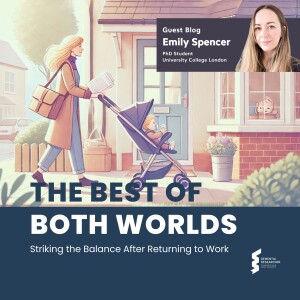
Emily Spencer, narrating her blog written for the Dementia Researcher website.In this blog, Emily shares her experience of returning to work after nine months of maternity leave while balancing her PhD and the challenges of parenthood. She reflects on the initial optimism of her decision to return early, influenced by financial considerations and the availability of childcare. However, as she navigates the reality of being away from her son during key developmental moments, she questions whether she made the right choice. Despite the emotional challenges, Emily remains thankful for the flexibility academia offers, allowing her to balance her research, finances, and family life, while optimistically looking ahead to finding a sustainable balance.
Find the original text, and narration here on our website.
https://www.dementiaresearcher.nihr.ac.uk/blog-the-best-of-both-worlds/
#DementiaResearch #AcademicMother #Academia #MaternityLeave #Research
--
Emily Spencer is a PhD Student at University College London looking at improving how GPs communicate with people with dementia and their family carers about their future care. Emily previous had a 5 year career break to pursue a career as a musician, and has previously undertaken research on improving the care people with dementia receive from their GP practice, as well as end-of-life and palliative care provision in the community. Emily is also a new mum and will be writing about her experiences navigating motherhood and a research career.
--
Enjoy listening? We're always looking for new bloggers, drop us a line. http://www.dementiaresearcher.nihr.ac.uk
This podcast is brought to you in association with Alzheimer's Association, Alzheimer's Research UK, Alzheimer's Society and Race Against Dementia, who we thank for their ongoing support.
--
Follow us on Social Media:
https://www.instagram.com/dementia_researcher/
https://www.facebook.com/Dementia.Researcher/
https://x.com/demrescommunity
https://bsky.app/profile/dementiaresearcher.bsky.social
https://www.linkedin.com/company/dementia-researcher