Dementia Researcher Blogs
The Dementia Researcher Blogs Podcasts - through this show, you can hear our bloggers read their blogs. So if you prefer to read, you can head or our website or you can listen on the move. These shows are about academic / research careers, research, science and life as an early career dementia researchers. Brought to you by https://www.dementiaresearcher.nihr.ac.uk - everything you need, all in one place. Remember to subscribe to our main ‘Dementia Researcher‘ Podcast, here and where ever you get your podcasts.
Listen on:






Episodes
Friday May 10, 2024
Friday May 10, 2024
Emily Spencer, narrating her blog written for the Dementia Researcher website.
Emily is writing about her experience of navigating the complexities of starting a family while forging an academic career. In this blog Emily reflects on her personal experiences and the unexpected openness about family planning that followed her announcement of having a baby. She explores the broader challenges faced by academics, particularly women, who must balance short-term contracts and uncertain job security with the desire to expand their families. Emily's blog highlights the additional planning and sacrifices required in academia compared to other professions and calls for systemic changes to support academics in their family planning decisions.
Find the original text, and narration here on our website.
https://www.dementiaresearcher.nihr.ac.uk/blog-the-illusion-of-choice-when-starting-a-family/
#DementiaResearch #AcademicMother #Academia #MaternityLeave #Research
--
Emily Spencer is a PhD Student at University College London looking at improving how GPs communicate with people with dementia and their family carers about their future care. Emily previous had a 5 year career break to pursue a career as a musician, and has previously undertaken research on improving the care people with dementia receive from their GP practice, as well as end-of-life and palliative care provision in the community. Emily is also a new mum and will be writing about her experiences navigating motherhood and a research career.
--
Enjoy listening? We're always looking for new bloggers, drop us a line. http://www.dementiaresearcher.nihr.ac.uk
This podcast is brought to you in association with Alzheimer's Association, Alzheimer's Research UK, Alzheimer's Society and Race Against Dementia, who we thank for their ongoing support.
--
Follow us on Social Media:
https://www.instagram.com/dementia_researcher/
https://www.facebook.com/Dementia.Researcher/
https://twitter.com/demrescommunity
https://www.linkedin.com/company/dementia-researcher
Thursday May 09, 2024
Thursday May 09, 2024
Dr Connor Richardson narrates his blog written for Dementia Researcher.
Connor reflects on the latest advancements in dementia research, focusing on cognitive reserve and resilience. Connor revisits seminal papers and discussions from a recent webinar moderated by Harriet Demnitz-King of University College London, highlighting the complexities of defining and measuring cognitive reserve. The discussions explored various theories and mechanisms such as Brain Maintenance and Brain Reserve, with a particular emphasis on resilience in maintaining cognitive functions despite aging and disease. Key findings from the year include the role of astrocyte reactivity in Alzheimer's disease and the protective influence of educational attainment on dementia, showcasing both new insights and persistent challenges in the field. The review underscores ongoing debates and the introduction of novel approaches in studying cognitive decline, suggesting a promising direction for future research.
Find the original text, and narration here on our website.
https://www.dementiaresearcher.nihr.ac.uk/blog-reserve-resilience-protective-factors-pia-year-in-review-recap/
Don’t forget, you can get involved in the RRPF PIA by joining ISTAART and get access to previous webinars!
--
Dr Connor Richardson is a Neuro-epidemiology Research Associate (soon to be NIHR Research Fellow) in the Newcastle University Population Health Sciences Institute. Connor is the research statistician for the Cognitive Function and Ageing studies (CFAS) multi-centre population cohort. His research interest lies in using advanced statistical modelling and machine learning to measure dementia risk. Connor blogs about his research, Equality, Diversity and Inclusion and sometimes his Pomapoo’s.
--
Enjoy listening? We're always looking for new bloggers, drop us a line. http://www.dementiaresearcher.nihr.ac.uk
This podcast is brought to you in association with Alzheimer's Association, Alzheimer's Research UK, Alzheimer's Society and Race Against Dementia, who we thank for their ongoing support.
--
Follow us on Social Media:
https://www.instagram.com/dementia_researcher/
https://www.facebook.com/Dementia.Researcher/
https://twitter.com/demrescommunity
https://www.linkedin.com/company/dementia-researcher
Tuesday May 07, 2024
Tuesday May 07, 2024
Dr Marianne Coleman narrates her blog written for the Dementia Researcher website.
Explore the latest global insights on Alzheimer's research with Marianne's blog reflecting on the Alzheimer's Disease International (ADI) Conference. Read or listen to learn more about her work, the conference experiences, and gain a deeper understanding of the progress being made in the field and how these developments can impact patients and research communities worldwide.
Find the original text, and narration here on our website.
https://www.dementiaresearcher.nihr.ac.uk/blog-connecting-globally-insights-from-the-adi-conference/
#ADI2024 #DementiaResearch #Dementia
--
Dr Marianne Coleman is an Orthoptist and Clinical Eyecare Research Fellow at the University of Melbourne & Australian College of Optometry (National Vision Research Institute). Marianne's research focusses on visual function and access to eyecare for people living with dementia. With a background working within the NHS, she notices that she saw lots of older adults, but few with dementia, and this inspired her to try and understand why. @MPOrthoptics
--
Enjoy listening? We're always looking for new bloggers, drop us a line. http://www.dementiaresearcher.nihr.ac.uk
This podcast is brought to you in association with Alzheimer's Association, Alzheimer's Research UK, Alzheimer's Society and Race Against Dementia, who we thank for their ongoing support.
--
Follow us on Social Media:
https://www.instagram.com/dementia_researcher/
https://www.facebook.com/Dementia.Researcher/
https://twitter.com/demrescommunity
https://www.linkedin.com/company/dementia-researcher
Friday May 03, 2024
Friday May 03, 2024
Ajantha Abey narrates his blog written for Dementia Researcher.
Ajantha's blog offers a professional and thought-provoking exploration of the integration of artificial intelligence in dementia research and diagnosis. He discusses both the opportunities and risks presented by AI technologies, from their potential to improve diagnostic accuracy and speed to the ethical concerns about bias and data privacy. This blog is a well-researched text, with insights drawn from recent academic debates and the Ajantha's own expertise. It is a must-read for professionals in the healthcare and technology sectors who are interested in the future of AI in medical research. Join Ajantha as she navigates through these complex topics with clarity and critical analysis, opening up a discussion on how AI can truly benefit dementia research (a story of AI potential for dementia diagnosis is in the news almost weekly) while considering the moral imperatives and risks involved.
Find the original text, and narration here on our website.
https://www.dementiaresearcher.nihr.ac.uk/blog-the-use-of-ai-for-dementia-diagnosis/
#AI #DementiaDiagnosis #DementiaResearch
--
Ajantha Abey is a PhD student in the Kavli Institute at University of Oxford. He is interested in the cellular mechanisms of Alzheimer's, Parkinson's, and other diseases of the ageing brain. Previously, having previoulsy explored neuropathology in dogs with dementia and potential stem cell replacement therapies. He now uses induced pluripotent stem cell derived neurons to try and model selective neuronal vulnerability: the phenomenon where some cells die but others remain resilient to neurodegenerative diseases.
--
Enjoy listening and reading our blogs? We're always on the look out for new contributors, drop us a line and share your own research and careers advice dementiaresearcher@ucl.ac.uk
This podcast is brought to you in association with Alzheimer's Association, Alzheimer's Research UK, Alzheimer's Society and Race Against Dementia, who we thank for their ongoing support.
--
Follow us on Social Media:
https://www.instagram.com/dementia_researcher/
https://www.facebook.com/Dementia.Researcher/
https://twitter.com/demrescommunity
https://www.linkedin.com/company/dementia-researcher
Wednesday May 01, 2024
Wednesday May 01, 2024
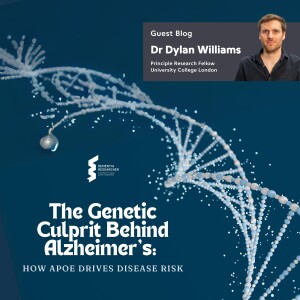
Dr Dylan Williams, narrates his blog written for the Dementia Researcher website.
In this article Dr Dylan Williams shares his research on the significant role of genetic variation, particularly concerning Apolipoprotein E (apoE), in the development of Alzheimer's disease. Dylan explains that specific isoforms of apoE, identified through genetic research, contribute differentially to the risk of developing this neurodegenerative condition. By focusing on the prevalent and impactful ε3 and ε4 isoforms, he underscores their substantial contribution to the disease, potentially accounting for three-quarters of all cases. This insight not only advances our understanding but also opens new avenues for targeted prevention strategies, demonstrating the power of genetic research in addressing complex diseases like Alzheimer's.
Find the original text, and narration here on our website.
https://www.dementiaresearcher.nihr.ac.uk/blog-the-genetic-culprit-behind-alzheimers/
--
Dr Dylan Williams is a Principle Research Fellow at University College London. By day Dylan is a molecular epidemiologist investigating the causes of neurodegenerative diseases. Outside work, he is dad to two young children, so he no longer have hobbies. However, he does read spent many hours listening to music and creating playlists & trail running (but only if the weather is nice). @dylan_wi11iams
--
Enjoy listening? We're always looking for new bloggers, drop us a line. http://www.dementiaresearcher.nihr.ac.uk
This podcast is brought to you in association with Alzheimer's Association, Alzheimer's Research UK, Alzheimer's Society and Race Against Dementia, who we thank for their ongoing support.
--
Follow us on Social Media:
https://www.instagram.com/dementia_researcher/
https://www.facebook.com/Dementia.Researcher/
https://twitter.com/demrescommunity
https://www.linkedin.com/company/dementia-researcher
Sunday Apr 28, 2024
Sunday Apr 28, 2024
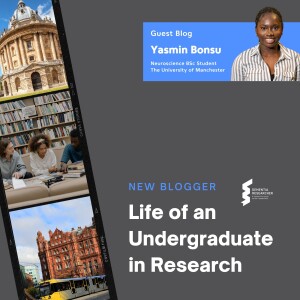
Yasmin Bonsu, narrates her blog written for the Dementia Researcher website.
Meet our newest monthly blogger... Yasmin Bonsu, a third-year neuroscience student at the University of Manchester, shares her journey as an undergraduate engaged in research during her placement year at the University of Oxford. Under the mentorship of Dr. Becky Carlyle and her colleague Amelia, Yasmin has navigated the complexities of academic research, experimenting with biological procedures and personal growth, despite the challenges of social anxiety and a strenuous commute from Milton Keynes to Oxford. Her research focuses on the potential protective effects of granin family neuropeptides on neurons affected by Alzheimer’s disease, with a goal to explore neuronal resilience. With genuine candour, Yasmin reflects on overcoming self-doubt, recognising the value of support systems, and the importance of embracing imperfection in the learning process. We hope you will enjoy hearing from Yasmin every month and follow her continued explorations in academia.
Find the original text, and narration here on our website.
https://www.dementiaresearcher.nihr.ac.uk/blog-life-of-an-undergraduate-in-research/
--
Yasmin Bonsu is an an undergraduate student from the University of Manchester currently undertaking a placement year at Wade-Martins Lab at Oxford University. Yasmin is investigating the activity of proteoforms of the granin family in cortical neurons insulted with oligomerised amyloid beta. Her goal is to finish her placement year, earn her bachelor’s degree in neuroscience, and then pursue a PhD in clinical neuroscience. Through Yasmin's blogs we'll gain insights on life as an undergraduate, and hopefully inspire others to pursue a career in dementia research. @yasminnnx2
--
Enjoy listening? We're always looking for new bloggers, drop us a line. http://www.dementiaresearcher.nihr.ac.uk
This podcast is brought to you in association with Alzheimer's Association, Alzheimer's Research UK, Alzheimer's Society and Race Against Dementia, who we thank for their ongoing support.
--
Follow us on Social Media:
https://www.instagram.com/dementia_researcher/
https://www.facebook.com/Dementia.Researcher/
https://twitter.com/demrescommunity
https://www.linkedin.com/company/dementia-researcher

Friday Apr 26, 2024
Friday Apr 26, 2024
Rebecca Williams, narrates her blog written for the Dementia Researcher website.
Rebecca's blog explores how collaboration across scientific disciplines can lead to major breakthroughs in understanding diseases. Her article illuminates the importance of team effort in research, as it can unlock the historical roots of genetic conditions and point towards future therapeutic strategies. By embracing the past and pooling diverse expertise, Rebecca demonstrates how today's MS have been paving the way for new treatments, which could even include the potential of parasites to alleviate neurological conditions.
Find the original text, and narration here on our website.
https://www.dementiaresearcher.nihr.ac.uk/blog-genetic-mystery-solved-the-importance-of-collaboration/
--
Rebecca Williams is PhD student at the University of Cambridge. Though originally from ‘up North’ in a small town called Leigh, she did her undergraduate and masters at the University of Oxford before defecting to Cambridge for her doctorate researching Frontotemporal dementia and Apathy. She now spends her days collecting data from wonderful volunteers, and coding. Outside work, she plays board games, and is very crafty. @beccasue99
--
Enjoy listening? We're always looking for new bloggers, drop us a line. http://www.dementiaresearcher.nihr.ac.uk
This podcast is brought to you in association with Alzheimer's Association, Alzheimer's Research UK, Alzheimer's Society and Race Against Dementia, who we thank for their ongoing support.
--
Follow us on Social Media:
https://www.instagram.com/dementia_researcher/
https://www.facebook.com/Dementia.Researcher/
https://twitter.com/demrescommunity
https://www.linkedin.com/company/dementia-researcher
Wednesday Apr 24, 2024
Wednesday Apr 24, 2024
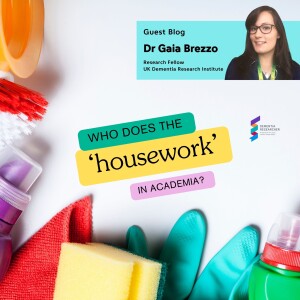
Dr Gaia Brezzo narrates her blog written for Dementia Researcher.
Drawing on a study published in Current Sociology, Gaia explores how societal gender roles have seeped into academia, leading to women disproportionately shouldering 'academic housework'—non-meritorious tasks like mentoring students and organizing conferences. The study, involving 163 interviews with social science professors in Denmark, categorises responses to academic admin into compliance, evasiveness, barter, and investment, revealing stark gender differences in engagement. Women, more often than not, find themselves in positions of compliance, accepting and performing these tasks far more than their male counterparts who frequently evade them. The implications are significant, affecting women’s research output and career progression within academia.
To gain a deeper understanding of this pervasive issue and its potential solutions, read the full blog or listen to Dr. Brezzo's narration for more insights.
Find the original text, and narration here on our website.
https://www.dementiaresearcher.nihr.ac.uk/blog-who-does-the-housework-in-academia/
#DementiaResearch #AcademicHousework #Academia #ResearchCulture
--
Dr Gaia Brezzo is a Research Fellow based within the UK Dementia Research Institute at The University of Edinburgh. Gaia's research focuses on understanding how immune alterations triggered by stroke shape chronic maladaptive neuroimmune responses that lead to post-stroke cognitive decline and vascular dementia. Raised in Italy, Gaia came to the UK to complete her undergraduate degree, and thankfully, stuck around. Gaia writes about her work and career challenges, when not biking her way up and down hills in Edinburgh. Follow Gaia on Twitter: @Gaia_Brezzo
--
Enjoy listening? We're always looking for new bloggers, drop us a line. http://www.dementiaresearcher.nihr.ac.uk
This podcast is brought to you in association with Alzheimer's Association, Alzheimer's Research UK, Alzheimer's Society and Race Against Dementia, who we thank for their ongoing support.
--
Follow us on Social Media:
https://www.instagram.com/dementia_researcher/
https://www.facebook.com/Dementia.Researcher/
https://twitter.com/demrescommunity
https://www.linkedin.com/company/dementia-researcher
Thursday Apr 18, 2024
Thursday Apr 18, 2024
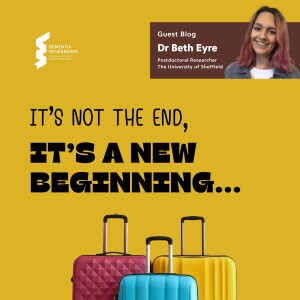
Dr Beth Eyre narrates her blog written for Dementia Researcher.
Beth reflects on her enriching journey from a PhD student to a postdoctoral researcher, in this heartfelt farewell blog. Beth shares insights from her experiences, the challenges of experimental failures, and the lessons learned in resilience and self-belief. As she prepares for a new role in Boston, USA, specialising in brain clearance and cerebral amyloid angiopathy, she shares her anticipation for future learning and her commitment to supporting upcoming researchers.
This blog shares the essence of her academic and personal growth, emphasising the importance of perseverance and community in scientific discovery.
As we say goodbye, Beth concludes with gratitude to the listeners and readers of her blogs, and shares her excitement for her next adventure in dementia research. Join her as she steps into this new chapter, continuing to contribute passionately to the field.
After a little more than 3 years, and 32 blogs charting the early days of her PhD to finding a great postdoc position, it has been wonderful to work with Beth. We hope you will join us in thanking her for taking us along with her on her PhD journey - post your comments below and leave a review.
Find the original text, and narration here on our website.
https://www.dementiaresearcher.nihr.ac.uk/blog-its-not-the-end-its-a-new-beginning/
Find all Beth's blogs on on our website.
--
Dr Beth Eyre is a Postdoctoral Researcher at The University of Sheffield, researching Neurovascular and cognitive function in preclinical models of Alzheimer’s disease. Beth has a background in psychology, where she gained her degree from the University of Leeds. Inside and outside the lab, Beth loves sharing her science and in her blogs, she discusses her work, career and shares lessons she learns as she navigates life as an early career researcher.
--
This podcast is brought to you in association with Alzheimer's Association, Alzheimer's Research UK, Alzheimer's Society and Race Against Dementia, who we thank for their ongoing support. Enjoy listening? We're always on the look out for new contributors, if you would like to write and narrate your own blog - drop us a line dementiaresearcher@ucl.ac.uk.
Don't forget to also listen to our fortnightly podcast, just look for Dementia Researcher in your podcast app.
--
Follow us on Social Media:
https://www.instagram.com/dementia_researcher/
https://www.facebook.com/Dementia.Researcher/
https://twitter.com/demrescommunity
https://www.linkedin.com/company/dementia-researcher