Dementia Researcher Blogs
The Dementia Researcher Blogs Podcasts - through this show, you can hear our bloggers read their blogs. So if you prefer to read, you can head or our website or you can listen on the move. These shows are about academic / research careers, research, science and life as an early career dementia researchers. Brought to you by https://www.dementiaresearcher.nihr.ac.uk - everything you need, all in one place. Remember to subscribe to our main ‘Dementia Researcher‘ Podcast, here and where ever you get your podcasts.
Listen on:






Episodes
Wednesday Jul 13, 2022
Wednesday Jul 13, 2022
Dr Sam Moxon, narrates his blog written for Dementia Researcher.
There are few things as important to our society as the ability to communicate with one another. It helps us express our ideas and feelings, understand the thoughts and emotions of others and build relationships. Communication allows us to both learn new ideas and pass our knowledge on. Without the ability to communicate, we would likely be one of the most primitive species on the planet. In this blog Sam makes a case for the importance of communication, at all levels.
Find the original text, and narration here on our website.
https://www.dementiaresearcher.nihr.ac.uk/guest-blog-communication-is-one-of-your-best-research-tools-heres-why/
--
Dr Sam Moxon is a biomaterials scientist at the University of Manchester. His expertise falls on the interface between biology and engineering. His PhD focussed on regenerative medicine and he now works on trying to develop 3D bioprinting techniques with human stem cells, so that we better understand and treat degenerative diseases. Outside of the lab he hikes through the Lake District and is an expert on all things Disney.
Enjoy listening and reading our blogs? We're always on the look out for new contributors, drop us a line and share your own research and careers advice dementiaresearcher@nihr.ac.uk
Friday Jul 08, 2022
Friday Jul 08, 2022
Dr Aida Suárez-Gonzalez narrates her blog written for Dementia Researcher.
One of the types of dementia I investigate in my research is Posterior Cortical Atrophy (PCA). PCA is also called the visual variant of Alzheimer´s disease (AD) because the syndrome is characterised by early and disabling visual difficulties and most (although not all) cases show underlying AD pathology. PCA is a young onset dementia, meaning most people with the condition present symptoms before the age of 65, typical in the 50s or early 60s.
Age at onset (AAO) is an important variable to study for dementia researchers because it is known to influence the clinical expression of AD. However, this important driving factor is currently under investigated in atypical forms of AD. In this blog Aida discusses her own research on the topic, and why this is important.
Find the original text, and narration here on our website.
https://www.dementiaresearcher.nihr.ac.uk/guest-blog-age-at-onset-in-atypical-alzheimers-why-it-matters/
We're always on the look out for new contributors, if you would like to write and narrate your own blog - drop us a line to dementiaresearcher@nihr.ac.uk
Don't forget to also listen to our fortnightly - published fortnightly, just look for Dementia Researcher in your podcast app.
--
Dr Aida Suarez-Gonzalez is a Clinical Neuropsychologist and Senior Research Fellow at the Dementia Research Centre, UCL Institute of Neurology at Queen Square. With many years clinical experience working in Spain, Aida now investigating non-pharmacological interventions, services and assistive technologies to support people living well with dementia.
--
This podcast is brought to you from University College London in association with the National Institute for Health Research, Alzheimer's Research UK and Alzheimer's Society, who we thank for their ongoing support. Enjoy listening? We're always looking for new bloggers, drop us a line dementiaresearcher@ucl.ac.uk

Thursday Jul 07, 2022
Thursday Jul 07, 2022
Dr Clarissa Giebel narrates her blog written for Dementia Researcher.
Have you met Clarissa in real life? Well, she has been out and about, and in this blog she discusses the value of in-person conferences, just incase you need some encouragement.
Find the original text, and narration here on our website.
https://www.dementiaresearcher.nihr.ac.uk/guest-blog-the-value-of-conferences-in-a-since-pandemic-world/
--
Dr Clarissa Giebel is a Research Fellow at the University of Liverpool and NIHR ARC North West Coast. Clarissa has been working in dementia care research for over 10 years focusing her research on helping people with dementia to live at home independently and well for longer, addressing inequalities that people with dementia and carers can face. Outside of her day work, Clarissa has also organised a local dementia network - the Liverpool Dementia & Ageing Research Forum, and has recently started her own podcast called the Ageing Scientist.
--
If you would like to write your own blog drop us a line, we're always on the look out for new contributors to write about their research, careers + more dementiaresearcher@nihr.ac.uk

Friday Jul 01, 2022
Friday Jul 01, 2022
Dr Kamar Ameen-Ali narrates her blog written for Dementia Researcher.
Modelling human disease in animals has significantly advanced our understanding of major diseases and ways of treating them. Mammalian model systems, like mice, continue to be the dominant model of choice, with 79% of experimental and breeding procedures using rats or mice in Great Britain in 2020. However, these traditional models can be bottlenecks in the research pipeline, delaying progress in areas where effective therapeutics are desperately needed. In a previous blog, Kamar questioned whether a reliance on animal models, specifically mice, had delayed progress in dementia research. Now she looks at the alternatives and consider whether they can drive forward the breakthroughs we need in dementia research.
Find the original text, and narration here on our website.
https://www.dementiaresearcher.nihr.ac.uk/guest-blog-is-it-time-to-look-at-alternatives-to-rodent-models-for-dementia-breakthroughs/
--
Dr Kamar Ameen-Ali is a Lecturer in Biomedical Science at Teesside University & Affiliate Researcher at Glasgow University. In addition to teaching, Kamar is exploring how neuroinflammation following traumatic brain injury contributes to the progression of neurodegenerative diseases that lead to dementia. Having first pursued a career as an NHS Psychologist, Kamar went back to University in Durham to look at rodent behavioural tasks to completed her PhD, and then worked as a regional Programme Manager for NC3Rs.
--
Enjoy listening? We're always looking for new bloggers, drop us a line. http://www.dementiaresearcher.nihr.ac.uk
This podcast is brought to you in association with Alzheimer's Research UK and Alzheimer's Society, who we thank for their ongoing support.
Tuesday Jun 28, 2022
Tuesday Jun 28, 2022
Nathan Stephens narrates his blog written for Dementia Researcher.
You already know Nathan the PhD Student, but what about Nathan the unpaid family carer? There are a number of reasons why he hasn't shared his and his family's lived experience with ‘you’ to date. It’s not because he's a fraud, nor because he hasn't tried... but because he simply couldn’t until now.
In this post I he sheds a glimmer of light on their experience. There’s no real theme or even coherent narrative to the post, but he hope you enjoy the pictures if nothing else. It’s important to note these are his views and opinions on his and his family's lived experience.
Find the original text, and narration here on our website.
https://www.dementiaresearcher.nihr.ac.uk/guest-blog-an-incoherent-blurb-from-an-unpaid-family-care-worker/
--
Nathan Stephens is a PhD Student and unpaid carer, working on his PhD at University of Worcester, studying the Worcestershire Meeting Centres Community Support Programme. Inspired by caring for both grandparents and personal experience of dementia, Nathan has gone from a BSc in Sports & Physical Education, an MSc in Public Health, and now working on his PhD.
--
Enjoy listening? We're always looking for new bloggers, drop us a line. http://www.dementiaresearcher.nihr.ac.uk
This podcast is brought to you in association with Alzheimer's Research UK and Alzheimer's Society, who we thank for their ongoing support.

Wednesday Jun 22, 2022
Wednesday Jun 22, 2022
Dr Kamar Ameen-Ali narrates her blog written for Dementia Researcher.
Are there are some days when all you feel you do is write? We imagine the life of a scientist is spent in the lab running experiments and making discoveries. The reality is far different. The further along Kam progresses in her career, the more time she spends outside the lab and in the office. Writing. But what is she writing about and how do you know if you're any good at it? In this blog Kam considers whether being good at writing is necessary to be a successful researcher and academic.
Find the original text, and narration here on our website.
https://www.dementiaresearcher.nihr.ac.uk/guest-blog-do-you-have-to-be-a-good-writer-to-be-a-successful-academic/
--
Dr Kamar Ameen-Ali is a Lecturer in Biomedical Science at Teesside University & Affiliate Researcher at Glasgow University. In addition to teaching, Kamar is exploring how neuroinflammation following traumatic brain injury contributes to the progression of neurodegenerative diseases that lead to dementia. Having first pursued a career as an NHS Psychologist, Kamar went back to University in Durham to look at rodent behavioural tasks to completed her PhD, and then worked as a regional Programme Manager for NC3Rs.
--
Enjoy listening? We're always looking for new bloggers, drop us a line. http://www.dementiaresearcher.nihr.ac.uk
This podcast is brought to you in association with Alzheimer's Research UK and Alzheimer's Society, who we thank for their ongoing support.
Tuesday Jun 21, 2022
Tuesday Jun 21, 2022
Last week we attended the Alzheimer's Disease International Conference in London. We took time out from the programme to talk with early career dementia researchers to ask them about their work, the challenges they have faced and how they overcame them.
In this short interview we talk with Esra Hassan, PhD Student from Brighton and Sussex Medical School. During her MSc Esra completed research in the areas of neuroimaging to detect cognitive biomarkers in anxiety disorders, molecular cancer biology working on Glioblastoma multiforme cells, looking at the endocannabinoid system in Parkinson’s disease and research positions in cognitive neuropsychology. Now she is currently working to establish the drivers and determinants of dementia attitudes in adolescents and understanding how these attitudes form and change over time.
Find out more about Esra and her work on our website:
https://www.dementiaresearcher.nihr.ac.uk/profile-esra-hassan-brighton-and-sussex-medical-school
If you would like to join us and add your profile and short interview to our researchers profile, drop us a line to dementiaresearcher@nihr.ac.uk
Friday Jun 17, 2022
Friday Jun 17, 2022
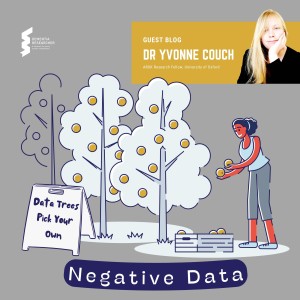
Dr Yvonne Couch, narrates her blog written for the Dementia Researcher website.
Yvonne was chatting with a friend recently about publishing things, and he was lamenting that he had a ton of stuff that was just sort of languishing unfinished. It was interesting but just not complete enough to be considered a paper. So today we’re going to talk about how we, as early career researchers, can help the scientific field change by thinking about how, where and what we publish - including just what to do with negative data.
Find the original text, and narration here on our website.
https://www.dementiaresearcher.nihr.ac.uk/guest-blog-negative-data/
--
Dr Yvonne Couch is an Alzheimer's Research UK Fellow at the University of Oxford. Yvonne studies the role of extracellular vesicles and their role in changing the function of the vasculature after stroke, aiming to discover why the prevalence of dementia after stroke is three times higher than the average. It is her passion for problem solving and love of science that drives her, in advancing our knowledge of disease. Yvonne has joined the team of staff bloggers at Dementia Researcher, and will be writing about her work and life as she takes a new road into independent research.
_____________________________________________________
Enjoy listening? We're always looking for new bloggers, drop us a line. http://www.dementiaresearcher.nihr.ac.uk
Wednesday Jun 15, 2022
Wednesday Jun 15, 2022
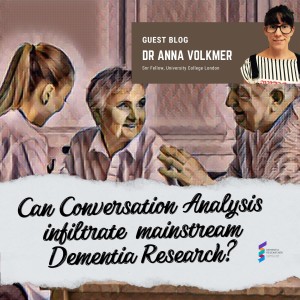
Dr Anna Volkmer, narrates her blog written for Dementia Researcher.
Research in dementia is developing at a great pace. The race for a ‘cure’ may not be as close as we wish but there is so much more of a focus on developing what we can do to care and support people living with this diagnosis. Incidentally this aligns with a greater focus on, and acceptance of, qualitative research methods as a worthy and rigorous approach worthy of the attention and funding from the greater and more financially generous organisations. So how can qualitative research methods, such as Conversation Analysis break through, and attract funding from funders and find their way into clinical services? Anna discusses in this blog.
Find the original text, and narration here on our website.
https://www.dementiaresearcher.nihr.ac.uk/guest-blog-can-conversation-analysis-infiltrate-mainstream-dementia-research/
--
Dr Anna Volkmer is a Speech and Language Therapist and researcher in Language and Cognition, Department of Psychology and Language Sciences, University College London. Anna is researching Speech and language therapy interventions in language led dementia and was once voted scariest speech and language therapist (even her children agree).
If you would like to write for us, or join out team of regular contributors, drop us a line - dementiaresearcher@nihr.ac.uk